50 Years Fighting for You
50 Years Winning for You

Tingey Injury Law Firm has been fighting for the people of Las Vegas since 1969.
We opened our doors the same year the first man walked on the moon. That’s how long we’ve been fighting for people like you who have been injured. Long before the tough-guy lawyer commercials and gimmicky jingles, we were here in Las Vegas, doing the work and maximizing our clients’ compensation for the injuries they have suffered.
Here is our commitment to you: when you are a client of Tingey Injury Law Firm, you are entitled to all 50 years of our expertise, strength, and integrity. No matter how big or small your case, we will be your advocate. We will put your interests first and make sure you are treated fairly.
contact@tingeylawfirm.com
702-333-0000
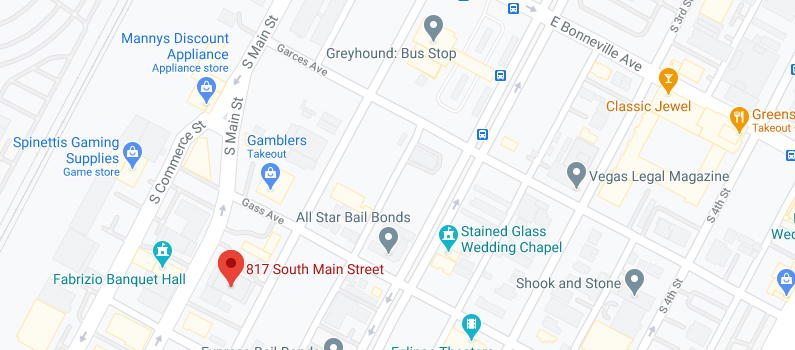
817 S. Main Street
Las Vegas, NV 89101
Our commitment to you:
Expertise.
Each personal injury claim is unique and complex. You need experts like us who can navigate the process. Our highly skilled team will work closely with you to resolve every aspect of your case: property damage, medical treatment, insurance. wage loss. All of it. We have 50 years of experience resolving claims of all types. Let us help you get you the best possible outcome for your case.
Strength.
You need someone like us who will fight for your interests every step of the way. We know when other parties aren’t putting your interests first and we will take the fight to them to make sure you are treated fairly. You need a strong team on your side and we won’t rest until we break down all barriers on the way to a fair settlement.
Integrity.
Our clients know they are our top priority and they come to us when they need a Las Vegas personal injury lawyer they can trust. We understand how much our clients value transparency and communication when it comes to resolving each case. Our commitment to you is to do what is right first and foremost for you! We are here to help you. Reach out to us today for a free case review.
Our Team
We’ve spent our entire careers building a reputation for providing the highest quality legal representation to our clients. You need a strong team on your side during this time, and we are prepared to fight on your behalf. Call us today for a free case evaluation with one of our attorneys. Our number one goal is to make sure you have everything you need to get your life back in order after a traumatic event. Whether you need a Las Vegas car accident lawyer, or representation for a workplace negligence case, we are ready to help.

Bruce D. Tingey
Bruce is skilled and experienced at handling litigation cases relating to personal injury and wrongful death. His additional experience in the realm of workers’ compensation law and procedure is a great asset to the firm. He has practiced law for more than two decades and is well respected within the Las Vegas valley’s legal community as an unparalleled litigator.

Dean M. Tingey
He has been practicing law for over twenty years, and his dedication and diligence make him an exemplary attorney within Tingey Injury Law Firm. Dean is a member of the Clark County Bar Association and the Nevada Justice Association.
What are people saying about Tingey Injury Law Firm?
“The best Lawyers in Las Vegas.”
— Ericka Jade Ruelas
“I recommend them without hesitation because they are honest and treated me with respect.”
– Lillian Sanchez
“If any one I know is involved in an accident, I’ll tell them to go with Tingey Injury Law Firm.”
— Julio Moreno
“Good, honest lawyers who are willing to fight for you. These guys are the best. I highly recommend them to everyone.”
— Scott P.
“We have received the best medical care there is. Thank you Tingey Injury Law Firm!”
— Ericka Jade Ruelas
What We Do
Personal Injury
Car Accidents
Work Injury
Brain Injury
Slip and Fall
Motorcycle Accident
Pedestrian Accident
Drunk Driver Accidents
Dog Bite
Nursing Home Negligence
Semi-Truck Accidents
Wrongful Death
Spinal Cord Injury
Call the Las Vegas personal injury lawyers at Tingey Injury Law Firm today.
Our only focus is Las Vegas personal injury law.
Las Vegas personal injury attorneys that you can trust.
FAQ’S
Do I require a personal injury attorney in Las Vegas?
When you incur an injury, a red flag goes off for insurance companies. They’ve been dealing in receiving premiums, and will go to any length to deny delivering the insurance claim that you deserve. When you speak to your insurance company after an injury, and do so without an attorney present, you run the risk of misrepresenting yourself, and potentially nullifying your insurance claim. We understand exactly what needs to be done in these circumstances, and are fully-equipped for all scenarios.
These incidents should never have to find their way into court. There are cases where insurance companies will fight to a stalemate, at which point we will represent you accordingly. In any case, victims of personal injuries should not seek their insurance companies out without proper representation. This gives them the perfect opportunity to corner you into unfair questioning; without a knowledge of law behind you, they will search out a weak spot, and capitalize on it. If you don’t know the full logistics of properly filing your insurance claim with your company, then you need a personal injury attorney in Las Vegas.
You will get a full breakdown of your rights based on evidence and other circumstances regarding to your particular case. You have the full backing and service of Tingey Injury Law behind you. Together, we’ll give you the peace of mind you’ve been waiting for, and allow you to regain your normal life while this situation is being dealt with by the professionals.
What claims am I entitled to?
Your life would never have been disrupted had an incident not arisen; you had no plans to miss work due to your injuries, or incur medical bills that otherwise never would have existed. In order to receive the most comprehensive compensation for your injuries, Tingey Injury Law will work tirelessly to ensure every area of your incident is covered.
Emotional Distress: Being the victim of any negligent act comes with surprise, and often leaves the victim in a state of duress, and in some cases, can invoke PTSD. Costs for therapist sessions and other mental health-related areas can be completely covered by your claim. You just need the experts who have the knowhow.
Medical Bills: Most incidents end up requiring moderate to long-term levels of medical care. You should not be stuck with a looming medical bill; you never asked to be hospitalized, and Tingey Injury Law understands that. We work around the clock to ensure your medical expenses are inclusive in your claim, and are paid appropriately.
Disability: If your incident resulted in a permanent disability, such as loss of function or mobility of one or more limbs or extremities, you will be living with this act of negligence far beyond your time spent with Tingey Injury Law, a courtroom, or any time spent in a hospital. It carries on with you. We will work to grant you extensive compensation for the change in your quality of life.
Earnings Loss: Calling out of work isn’t an option under these circumstances; it is often a necessity. Any income you would have earned during your recovery period can be granted to you. Bills should not stack up while you recover; we know that more than anybody. Your earnings loss will be compensated as part of your claim.
Property Damage: If an incident occurred that involuntarily included your personal property, such as a car accident damaging your storefront, you are also poised to receive compensation. Your loss of business is nothing to take lightly, and nobody knows that better than Tingey Injury Law. You deserve full compensation for disruptions to your income.
What claims does Tingey Injury Law Firm Cover?
We cover multiple claims. Whether you were the victim of an automobile-related event, a pedestrian, injured on a construction site or fell in a public place, you are entitled to receive compensation for your injuries. When safety systems fail, or negligence comes into play, someone ends up the victim. In this case, it was you, and you are not alone.
Over 100,000 automobile-related crashes occur in Nevada annually. While only 30% of these generally include bodily damage, that is still 30,000 people who are affected by negligent driving and operations every single year. If you or your property has been damaged, then you need the experts by your side to ensure full compensation.
What should I look for in a personal injury attorney in Las Vegas?
You need those with a strong track record. Many offices spring up with little to no experience, and promise the best procedural assistance to those in need, but they have no legs to stand on. At Tingey Injury Law, our experience and track record supersedes our reputation. You can expect professional, attentive care, and attention to your case. We are interested in helping those who have been victimized in cases of negligent individuals improperly conducting themselves. You should never have to go into the legal portion of your incident alone.
With experience and success at the helm, Tingey Injury Law continues to assist those in Nevada as the best personal injury lawyers in Las Vegas. If you have been injured due to no fault of your own, you need to act quickly, and concisely. We are standing by and ready to assist you, no matter what the case specifications are.
What should I do post-injury?
Every choice you make immediately following your injury can affect your probability of receiving the entire policy that you rightfully deserve. The first thing that you should do is assess your personal damage. Your life is far more valuable than collecting evidence of your attack. If your injuries are not life-threatening, you should use your cellphone’s camera to take photographs of the incident from as many angles as possible. Write down everything you remember about what happened, and contact the authorities immediately. Failing to do so can result in a lack of belief when the time comes to make your claim to the insurance company.
For every piece of evidence you can gather to build a concrete recreation of what transpired, your claim to an insurance settlement is that much stronger. Photographs can be used in the courtroom, while handwritten notes can be thrown out as circumstantial pieces of evidence. Information regarding the date, time, and even weather conditions, as well as contact information for eyewitnesses, can be utilized to corroborate your story between a proper police report, witness testimonies, and accurate descriptions of the damage done.
When you’re speaking with an eyewitness to the incident, ensure that you grab every single piece of valid information that you can. This includes their full name, address, email address, phone number, possibly where they work, and any other relevant information that could be deemed useful. An eyewitness can be an immensely helpful tool.
What if I couldn’t gather information at the scene?
If you were a victim of any incident that arose from an act of negligence, you need a personal injury lawyer in Las Vegas to assist you with every step of the procedure. Under the circumstances that you were not able to acquire valid information on scene, it is safe to assume you needed extensive medical attention, and simply couldn’t retrieve this information on your own. This means the police and EMTs were involved in the situation, and you have more than enough extensive evidence, including a track of your injuries from undeniable sources. Official EMT and police reports are non-disputable. While you weren’t able to gather information on your own, the most important thing is that you are safe, and that you are a prime candidate to receive the full amount you are owed. `
Even if all the conditions are right, you still need to contact an experienced personal injury attorney in Las Vegas. Proceeding without legal representation can prove to stack the odds against you, even if certain levels of evidence are blindingly clear. Insurance companies do their best to ensure you don’t see a single penny of your claim through any technicality that they can conjure. This is especially true during car accidents. You need a car accident lawyer in Las Vegas; this is where Tingey Injury Law comes in.
What is the statute of limitations in Nevada?
Personal injuries that are not reported right away lose validity with each passing moment. A personal injury, and seeking compensation for said injury, is considered a legal issue. One is held responsible due to their negligence, and you have emerged as the victim. The faster you report an incident to the police, the better your odds are for validating your claim when seeking compensation.
It is paramount to seek not only injuries lawyers, but the best injury lawyers in Las Vegas, to assist you in attaining everything you deserve for what has happened. Through every available avenue, the experts at Tingey Injury Law can get you the full amount owed to you. It all starts with a phone call, or a visit to our office.
What else are people saying about Tingey Injury Law Firm?
— Enrique Velez
— Stacy F.
— Julio Moreno
— Lillian Sanchez